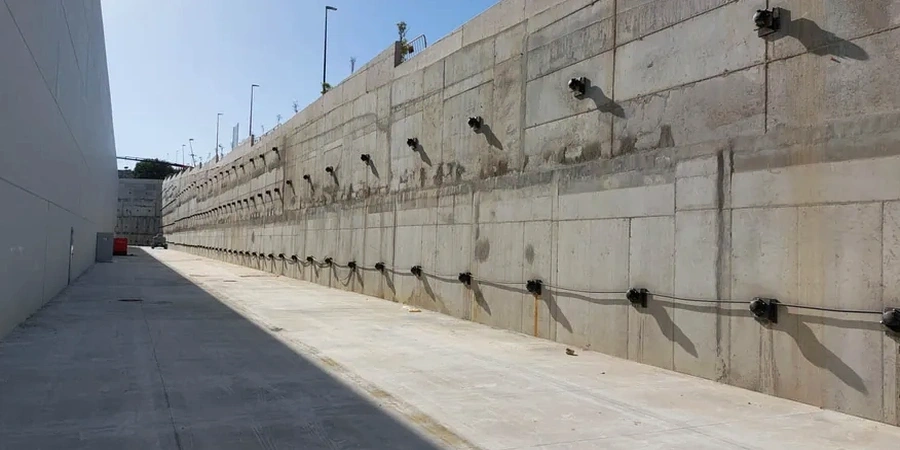
Slope and wall engineering in Minneapolis addresses the critical challenge of stabilizing earth structures within a landscape shaped by glacial history and urban density. This category encompasses the analysis, design, and reinforcement of both natural and constructed slopes, as well as the implementation of retaining structures that resist lateral soil pressures. From the steep bluffs overlooking the Mississippi River to the deep excavations required for downtown parking structures, the integrity of these systems directly protects property, infrastructure, and public safety. A comprehensive approach involves rigorous slope stability analysis to evaluate failure risks and the tailored design of structural elements to mitigate them.
The local geology is dominated by a complex stratigraphy of glacial tills, outwash sands, and lacustrine clays overlying Paleozoic sedimentary bedrock, including the regionally significant St. Peter Sandstone and Platteville Limestone. These conditions create unique geotechnical challenges. The stiff, overconsolidated glacial till can stand on steep cut faces temporarily but is highly susceptible to long-term creep and surficial sloughing when saturated. Conversely, the underlying sandstone is prone to undercutting and weathering, often necessitating durable retaining wall design solutions that account for differential settlement and groundwater seepage pressures at the soil-rock interface.
Regulatory compliance is governed by the Minnesota State Building Code, which adopts the International Building Code (IBC) with state-specific amendments. Chapter 18 of the IBC, covering Soils and Foundations, mandates geotechnical investigations and design parameters conforming to ASCE 7 standards for lateral earth pressures. For public projects, the Minnesota Department of Transportation (MnDOT) provides stringent guidelines for mechanically stabilized earth (MSE) walls and soil nail systems. Local municipalities, including the City of Minneapolis, enforce additional grading and erosion control ordinances that dictate slope setbacks, maximum gradients, and stormwater management integration, all of which directly influence the design of active/passive anchor design for permanent and temporary support systems.
These services are essential across a spectrum of projects in the Twin Cities. Major transportation corridors like the I-35W corridor require anchored soldier pile walls to accommodate widening within constrained rights-of-way. Commercial developments in the North Loop often need deep basements with permanent tied-back retaining walls to maximize buildable area. The Minneapolis Park and Recreation Board relies on slope stability remediation to protect parkland trails and bridges from riverbank erosion. Even single-family residential construction on the area's many lakefront or hillside lots frequently triggers the need for engineered segmental block walls and slope stabilization measures to prevent yard loss and foundation distress.
Common types include cantilever cast-in-place concrete walls for high loads, segmental block MSE walls for residential developments, and anchored soldier pile walls for deep urban excavations. The selection is heavily influenced by the local stratigraphy; stiff glacial tills permit steep temporary cuts, but the presence of water-bearing sand layers often necessitates walls with robust drainage systems and deeper foundations bearing on competent soils or bedrock.
A slope stability analysis is typically mandated by the City of Minneapolis for any proposed disturbance on slopes steeper than 3:1 (horizontal:vertical) or for cuts and fills exceeding 12 feet in height. It is also required when constructing structures within a defined setback from the top or toe of a slope, particularly in areas mapped as having potential for bluff failure along the Mississippi River corridor.
Permanent retaining structures are generally designed for a service life of 50 to 75 years in accordance with AASHTO and MnDOT standards for non-bridge structures. This requires durable materials resistant to freeze-thaw cycles, such as air-entrained concrete with a minimum 4,000 psi compressive strength, and corrosion protection measures for steel elements, including galvanization or epoxy coating for soil nails and anchors.
Groundwater is a critical design factor due to perched water tables in glacial deposits and seasonal fluctuations. Hydrostatic pressure buildup behind walls can double the lateral load if not managed. Effective design nearly always incorporates drainage elements like blanket drains, chimney drains, or weep holes. Slope dewatering via horizontal drains may also be necessary to prevent a rise in pore-water pressure that triggers instability in clay-rich soils.