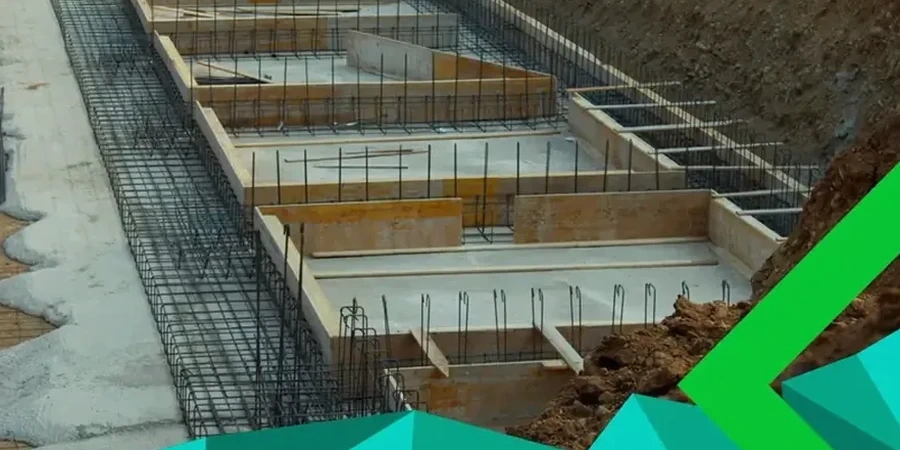
Foundation engineering in Minneapolis is far more than simply placing concrete in the ground — it is a discipline that must reconcile ambitious structural demands with some of the most challenging subsurface conditions in the Upper Midwest. The category encompasses all aspects of designing, analyzing, and constructing the elements that transfer building loads to competent soil or bedrock, including shallow footings, mat foundations, deep foundations, and specialized ground improvement techniques. For property owners, developers, and contractors across the Twin Cities, a properly executed foundation system is the single most critical investment in the longevity and safety of any structure, from single-family homes in Linden Hills to mid-rise commercial buildings in the North Loop.
Minneapolis sits atop a complex glacial legacy that directly shapes every foundation decision. Much of the city is underlain by thick deposits of cohesive glacial till, interspersed with layers of compressible lacustrine clays and silts deposited by Glacial Lake Agassiz and its predecessors. These fine-grained soils often exhibit low bearing capacity, high moisture retention, and moderate to high plasticity, making them susceptible to differential settlement and frost heave. In areas near the Mississippi River corridor and its tributaries, alluvial sands and organic silts introduce additional variability, while bedrock — primarily Platteville limestone and underlying St. Peter sandstone — can be found at depths ranging from 20 to over 150 feet below grade. This geological patchwork demands rigorous geotechnical investigation before any foundation strategy can be confidently selected.
Local regulatory compliance is governed by the Minnesota State Building Code, which adopts and amends the International Building Code (IBC) with Minnesota-specific provisions in Chapter 1300. Foundation design must satisfy the structural requirements of IBC Chapter 18, including allowable bearing pressures and lateral earth pressure criteria, while conforming to the Minnesota Department of Labor and Industry’s administrative rules. In Minneapolis proper, the Department of Community Planning and Economic Development enforces additional zoning and excavation safety ordinances, and any foundation deeper than 12 feet typically triggers review under the city’s excavation and shoring permit framework. Geotechnical reports must be stamped by a licensed professional engineer and are required for all commercial, multi-family, and institutional projects — and increasingly for custom residential builds in known problem soil zones.
The types of projects that demand specialized foundation expertise in Minneapolis are diverse. Low-rise residential construction often relies on spread footings bearing on engineered fill or compacted glacial till, but where soft clays dominate, designers turn to pile foundation design using driven steel H-piles or helical piles to reach competent material. Mid-rise and high-rise structures in the downtown core frequently require deep foundation systems such as drilled shafts or auger-cast piles to bypass weak surficial soils and transfer column loads to bedrock. Infrastructure projects — bridges, retaining walls, and stormwater management structures — must account not only for vertical loads but also for lateral earth pressures and scour potential, often integrating tieback anchors or soil nail walls. Even renovation and adaptive reuse projects in historic districts demand underpinning and foundation retrofit strategies that preserve existing fabric while meeting modern seismic and serviceability standards.
The primary drivers are seasonal freeze-thaw cycles, which cause frost heave in frost-susceptible silts and clays, and the presence of compressible lacustrine clay layers that consolidate unevenly under load. Inadequate surface drainage, leaking utility lines, and mature tree root systems near structures can also introduce localized moisture fluctuations that exacerbate differential settlement and cracking.
A geotechnical investigation will determine if shallow soils have sufficient bearing capacity and tolerable settlement characteristics. Deep foundations become necessary when weak clays or loose sands extend to depths that make spread footings impractical, when bedrock is shallow but erratic, or when structural loads are too high to be safely distributed by shallow elements without excessive settlement.
Foundation design falls under the Minnesota State Building Code, which adopts the International Building Code with state-specific amendments. Chapter 18 of the IBC governs foundations and retaining walls, supplemented by Minneapolis ordinances for excavation, shoring, and groundwater control. All geotechnical and structural designs must be sealed by a Minnesota-licensed professional engineer.
Timelines vary with project complexity, but a typical commercial schedule includes two to four weeks for subsurface exploration and laboratory testing, followed by three to six weeks for geotechnical analysis and foundation design development. Municipal plan review in Minneapolis can add an additional four to eight weeks, depending on the scope and whether shoring permits are required.