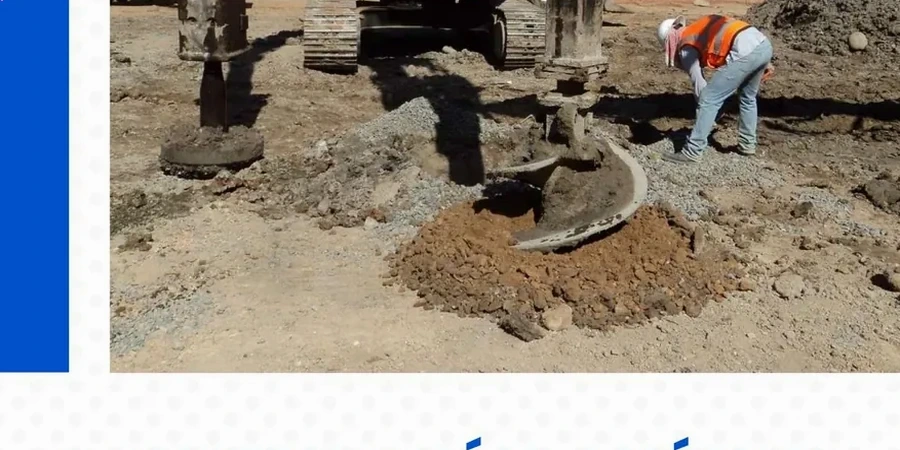
Ground improvement in Minneapolis represents a critical discipline within geotechnical engineering, focused on modifying and enhancing the engineering properties of soil and rock to support safe, durable construction. The category encompasses a range of techniques designed to increase bearing capacity, reduce settlement, mitigate liquefaction potential, and improve drainage characteristics of subsurface materials. In a city where the built environment continues to expand both vertically and horizontally, the ability to reliably improve weak or problematic soils directly influences project feasibility, structural integrity, and long-term performance. From commercial high-rises in downtown to infrastructure renewal along the Mississippi River corridors, ground improvement serves as the invisible foundation upon which Minneapolis's growth depends.
The local geology of Minneapolis presents unique challenges that make ground improvement particularly relevant. Much of the metropolitan area is underlain by glacial deposits from the last ice age, including loose to medium-dense sands, silts, and soft clays associated with glacial Lake Agassiz and later river terrace formations. These soils, especially in areas near the Mississippi and Minnesota Rivers, can exhibit poor load-bearing characteristics and are susceptible to settlement under structural loads. Additionally, the presence of shallow groundwater tables in many parts of the city complicates excavation and foundation construction, requiring solutions that can densify or reinforce soils without dewatering. Understanding this glacial and alluvial stratigraphy is essential for selecting appropriate improvement methods that address site-specific conditions.
Ground improvement work in Minneapolis must comply with applicable building codes and standards, primarily the Minnesota State Building Code, which adopts and amends the International Building Code (IBC) with local provisions. Chapter 18 of the IBC, governing soils and foundations, establishes requirements for site investigations, allowable bearing pressures, and settlement criteria that often necessitate ground improvement where native soils are inadequate. The Minnesota Department of Transportation (MnDOT) also provides geotechnical guidelines for public infrastructure projects, referencing standards from AASHTO and FHWA. These regulations collectively require that ground improvement designs be developed under the responsible charge of a licensed professional engineer and be supported by adequate subsurface exploration and testing, ensuring that all treated ground meets performance specifications for the intended structure type and occupancy.
Projects across Minneapolis that commonly require ground improvement include new construction on brownfield sites or areas with undocumented fill, expansions of healthcare and university campuses where settlement-sensitive equipment or facilities are involved, and transportation infrastructure such as bridge approaches, light rail extensions, and roadway embankments over soft soils. Deep foundations are not always the most economical or practical solution, and in many cases, techniques like stone column design offer a cost-effective alternative by reinforcing weak cohesive soils while providing drainage paths that accelerate consolidation. For granular deposits requiring densification to prevent liquefaction or reduce settlement, vibrocompaction design is frequently specified, particularly in the sandy river terrace deposits common along the Mississippi. These methods, along with rigid inclusions, deep soil mixing, and compaction grouting, form the toolkit that geotechnical engineers employ to tailor solutions to site constraints and performance demands.
Ground improvement refers to techniques that enhance soil properties to meet project requirements for bearing capacity, settlement control, and stability. In Minneapolis, it becomes necessary when native glacial or alluvial soils—such as loose sands, soft silts, or compressible clays—cannot adequately support proposed structures without excessive settlement or risk of failure. It is commonly triggered by geotechnical investigations that reveal conditions not meeting Minnesota Building Code foundation criteria.
Minneapolis soils are dominated by glacial deposits including loose granular river terrace sands and soft lacustrine clays. Granular soils with low relative density are candidates for densification techniques like vibrocompaction, while cohesive soft clays often require reinforcement such as stone columns or rigid inclusions. Groundwater levels, soil stratigraphy, and proximity to existing structures further dictate which methods are technically feasible and least disruptive.
Ground improvement falls under the Minnesota State Building Code, which adopts the International Building Code Chapter 18 for soils and foundations. Designs must be sealed by a licensed professional engineer and based on adequate subsurface exploration. For transportation projects, MnDOT geotechnical manuals apply, referencing AASHTO and FHWA standards that specify performance requirements and testing protocols for improved ground.
Typical applications include supporting commercial and residential buildings over weak or variable fill, stabilizing embankments and bridge approaches for highway and light rail projects, mitigating liquefaction in sandy soils near the Mississippi River, and preparing industrial or healthcare sites where differential settlement cannot be tolerated. It is also used to accelerate consolidation under new structural fills and reduce construction timelines.