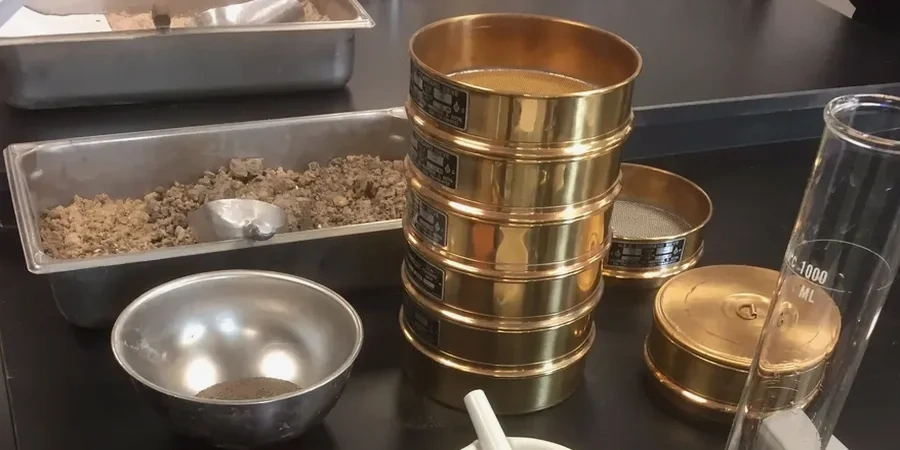
Geotechnical laboratory testing forms the backbone of any successful construction or infrastructure project in Minneapolis, transforming field samples into actionable engineering data. The 'Laboratory' category encompasses a comprehensive suite of index, classification, and performance tests performed on soil, rock, and aggregate materials under controlled conditions. These tests are not merely procedural checkboxes; they are essential for determining bearing capacity, settlement potential, shear strength, and hydraulic conductivity. In a city built on variable glacial deposits and riverine sediments, relying on assumed parameters is a significant risk. Accurate lab data, derived from services like grain size analysis (sieve + hydrometer), allows geotechnical engineers to calibrate their models precisely, ensuring that designs for foundations, retaining walls, and pavements reflect the true subsurface conditions.
The geological context of Minneapolis makes rigorous laboratory testing particularly critical. The city sits atop a complex stratigraphy shaped by the last glacial advance and the erosive power of the Mississippi River. Much of the downtown core and surrounding areas are underlain by a sequence of glacial tills, lacustrine clays, and alluvial sands. These formations can shift dramatically over short distances; a borehole might encounter stiff, overconsolidated till, while another a few meters away hits a pocket of soft, compressible organic silt. This heterogeneity demands a detailed characterization of fine-grained soils, where Atterberg limits testing becomes vital. Understanding the liquid and plastic limits of these local clays is fundamental to predicting their expansive behavior during freeze-thaw cycles—a dominant weathering mechanism in Minnesota’s continental climate.
Adherence to national and local standards is a non-negotiable pillar of laboratory operations in Minneapolis. All testing procedures strictly follow the specifications outlined by ASTM International, with particular emphasis on ASTM D422 for particle-size analysis and ASTM D4318 for Atterberg limits. Furthermore, project-specific compliance with the Minnesota Department of Transportation (MnDOT) standard specifications is mandatory for any publicly funded roadway or bridge work. These norms dictate everything from sample curing conditions to the specific type of hydrometer used in sedimentation analysis. The laboratory environment itself must maintain strict quality control under standards like ASTM E329 and AASHTO R18, ensuring that equipment calibration and technician proficiency are continuously verified, providing a defensible legal record for the design team.
The types of projects in Minneapolis that require these services are diverse, ranging from high-rise developments in the North Loop to critical infrastructure rehabilitation. Foundation design for any structure relies on laboratory-derived shear strength parameters to prevent bearing capacity failures. Pavement engineering projects, including the reconstruction of arterial roads like Hennepin Avenue, depend on grain size distributions and Proctor compaction tests to design durable base and sub-base layers that can withstand severe frost heave. Environmental site assessments routinely pair chemical analysis with physical classification to model contaminant transport through the vadose zone. In essence, whether it is a residential lot, a large-scale commercial warehouse, or a stormwater infiltration basin, the laboratory provides the quantitative basis for safe, cost-effective, and code-compliant earthwork and structural design.
A geotechnical laboratory program classifies soils and determines their engineering properties, such as strength, compressibility, and permeability. This data is essential for designing safe foundations, predicting settlement, and evaluating slope stability. Without lab verification, field classifications alone are often insufficient to quantify how soils will behave under structural loads or changing moisture conditions.
Minneapolis soils, predominantly glacial tills and lake-laid clays, are highly variable and sensitive to moisture. This requires a focus on Atterberg limits to assess shrink-swell potential and frost susceptibility. Grain size analysis is equally critical to distinguish between free-draining alluvial sands and impermeable lacustrine silts, directly impacting dewatering and drainage design.
Laboratory testing must conform to ASTM International standards, such as ASTM D422 and D4318, for basic classification. For public infrastructure, compliance with MnDOT specifications is mandatory. Quality assurance follows ASTM E329, ensuring that all equipment is calibrated and that results are reproducible and legally defensible for the project's governing authority.
Visual soil classification is subjective and cannot measure engineering properties like shear strength or consolidation potential. Two soils that look identical can have vastly different silt and clay contents, leading to different bearing capacities. Laboratory testing quantifies these differences, preventing design assumptions that could lead to differential settlement or structural distress.