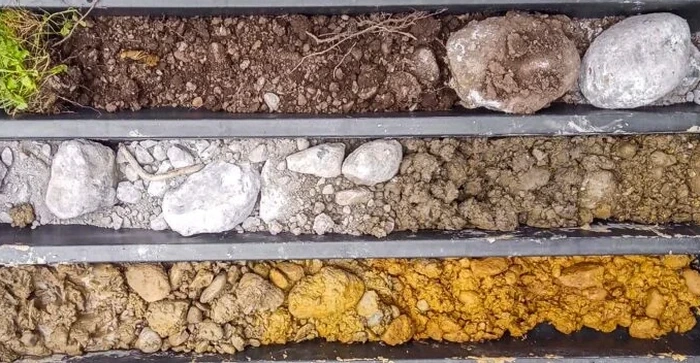
Geotechnical investigation in Minneapolis forms the critical foundation for safe and durable construction across the Twin Cities region. This category encompasses the systematic evaluation of subsurface soil, rock, and groundwater conditions to inform foundation design, earthwork, and infrastructure planning. Given Minneapolis's complex glacial history, variable soil profiles, and proximity to the Mississippi River, a thorough site investigation is not merely a regulatory formality but an engineering necessity. From the expansive downtown high-rises to residential developments in neighborhoods like Linden Hills, understanding what lies beneath the surface directly impacts structural integrity, cost control, and long-term performance.
Minneapolis sits atop a diverse geological landscape shaped by repeated glacial advances and retreats. The surficial geology is dominated by Quaternary deposits, including dense glacial till, outwash sands and gravels, and lacustrine clays. Beneath these lie Paleozoic sedimentary rocks such as the St. Peter Sandstone and Prairie du Chien dolomite. The city's position along the Mississippi River gorge introduces additional complexity, with deeply incised valleys filled with alluvial deposits. These conditions create significant variability even within a single site, making standardized foundation solutions unreliable. Loose sands in river terraces, for example, can trigger liquefaction concerns, while the compressible clays in former lake beds demand careful settlement analysis.
Investigation work in Minneapolis must comply with the Minnesota State Building Code, which adopts the International Building Code (IBC) with local amendments. Chapter 18 of the IBC mandates geotechnical investigations for all structures, specifying requirements for soil borings, sampling, and reporting. The Minnesota Department of Labor and Industry oversees enforcement, while the Minnesota Pollution Control Agency regulates environmental aspects of subsurface exploration, including monitoring well installation and soil management. For public projects, the Minnesota Department of Transportation (MnDOT) sets additional standards through its Geotechnical and Pavement Manuals. Adherence to ASTM International standards—such as D1586 for the Standard Penetration Test—is universal practice among local firms.
The scope of projects requiring professional geotechnical investigation in Minneapolis is broad. Commercial developments in the North Loop demand deep foundation analysis, while bridge and highway projects managed by Hennepin County or MnDOT rely on detailed subsurface profiles for abutment and embankment design. Residential additions on the city's gently sloping lots often need bearing capacity verification, and stormwater infiltration systems require permeability testing to meet city ordinance. Specialized techniques like the Cone Penetration Test have become increasingly popular for urban sites due to their speed, data continuity, and minimal disturbance compared to traditional drilling. This method proves particularly valuable in Minneapolis's dense neighborhoods where access is tight and vibration concerns are high.
A geotechnical investigation is mandated by the Minnesota State Building Code for all new buildings and significant additions. The International Building Code (IBC), adopted locally, requires it for any structure, with the scope scaled to the project's complexity. Even for smaller residential projects like retaining walls over four feet or additions with concentrated loads, the City of Minneapolis typically requires a soils report to issue a building permit, ensuring foundation designs account for site-specific soil conditions.
Minneapolis features highly variable soils due to its glacial history. Common conditions include dense glacial till with high bearing capacity, loose to medium-dense alluvial sands along river corridors, and compressible lacustrine clays in former lake plains. Depth to bedrock can range from near-surface in the St. Anthony Falls area to over 100 feet in buried valleys. Groundwater is often shallow, especially near the Chain of Lakes, requiring dewatering considerations during construction.
The process begins with a desktop study reviewing geological maps, historical well logs from the Minnesota Geological Survey, and prior reports. Fieldwork follows, typically involving soil borings with Standard Penetration Testing (SPT), test pits, or Cone Penetration Testing (CPT). Samples undergo laboratory analysis for classification, strength, and compressibility. The final report provides foundation recommendations, lateral earth pressures, and construction considerations, all sealed by a licensed professional engineer.
Investigations follow the Minnesota State Building Code, which references the IBC Chapter 18 and ASCE 7 for seismic and load requirements. Testing methods adhere to ASTM standards, including D1586 for SPT and D5778 for CPT. MnDOT's Geotechnical Manual provides additional guidance for public infrastructure. Environmental protocols are set by the Minnesota Pollution Control Agency, particularly for soil disposal and groundwater monitoring well installation during subsurface exploration.